
Inspiring Capability and Neurodiversity
Inspiring Capability is a way of describing how we take in, process, recall and share information and experiences. We each have unique ways of doing this. Having models for our processing helps us to understand ourselves, advocate for our needs and to understand others and how our systems might complement or clash with one another.
Inspiring Capability can be how we: work at our best, work at our worst, make decisions, experience time, remember information, forget information - in fact, you can develop a metaphor / model for almost any human experience and then compare and contrast how you do it with how others do the same activity.
All Inspiring Capability activities can be used by anyone, whether you consider yourself neurodivergent or neurotypical. But, for neurodivergent individuals and teams, understanding how your own system works can be particularly important. This is especially true if you have developed shame about why you are very good at certain activities while struggling with others or if you have been repeatedly misunderstood or negatively labelled by others who only view your behaviour through their own abilities.
Getting to know your own system better enables you to discover what you are like as an individual, what you’d like to have happen and what kind of support and resources you need so that you can be at your best more of the time.
When we notice what helps and what hinders us, we begin to understand the conditions we need to thrive.
Inspiring Capability in Individual Systems and Systems of diverse Individuals
Here’s an example of how Emily and Caitlin noticed that their systems were clashing and how they developed their own invisible architecture and Inspired Capability, to help them to understand themselves and improve their working relationship.
Emily’s Individual Model for working at her best: Dominoes
When Emily is working at her best, it’s like she’s lining up dominoes; they’re precisely placed and in a very particular order. Then once she is sure they’re ready she can push the first one and whoosh!
In reality this means that Emily is very detailed and organised in the way she works. She works at her best when she systemises her tasks and sometimes likes dedicating focus time on one particular kind of task. She can take a long time to get ready to execute tasks and then completes them very quickly.

Caitlin’s Individual Model for working at her best: Mosh Pit
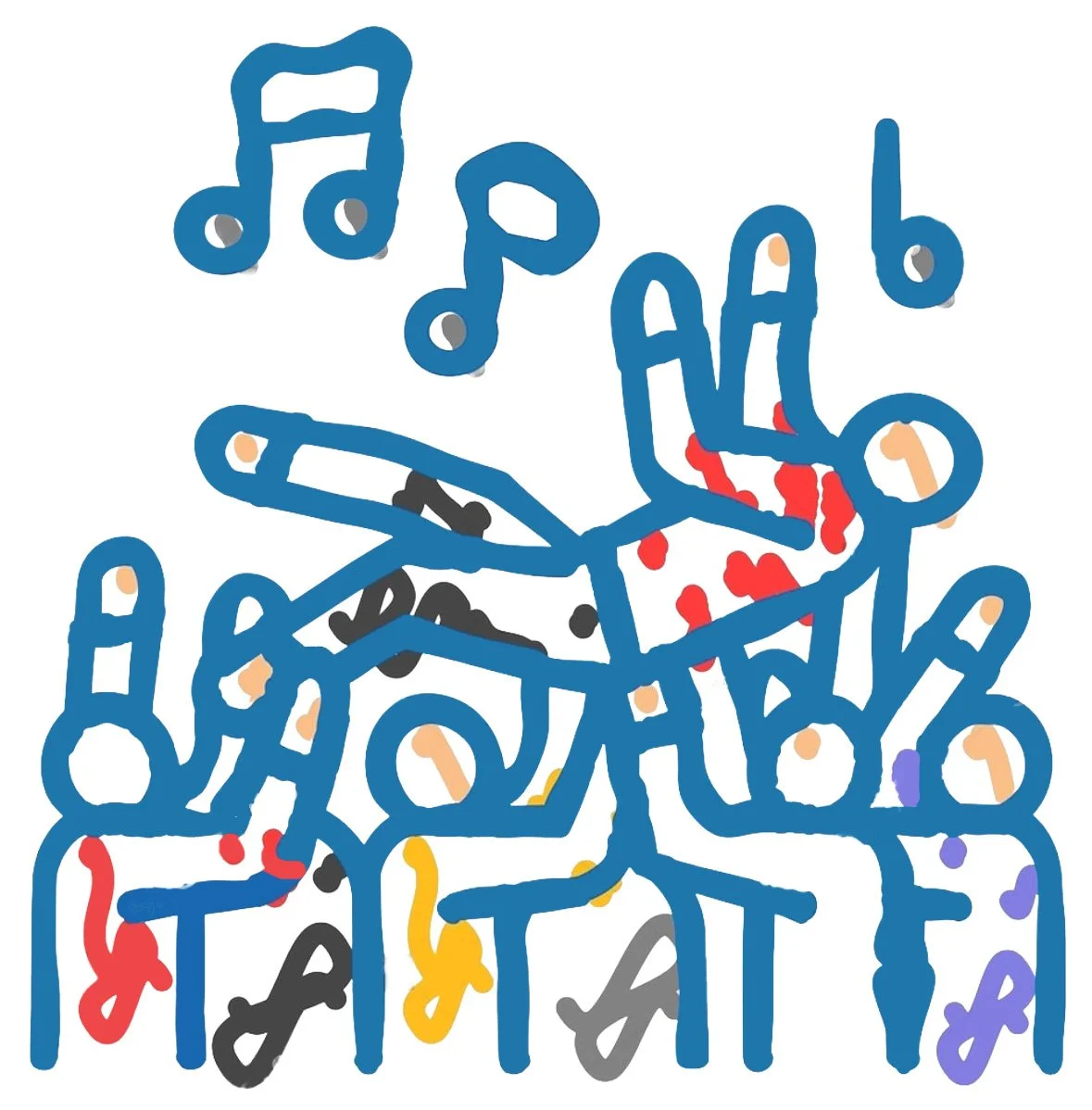
When Caitlin is working at her best, it’s like she’s in a mosh pit. There are bodies flying, people bumping each other at the edges, the crowd catching a stage diver and people supporting one another if someone gets knocked over.
In day-to-day working, this means Caitlin does her best thinking when working alongside others, she prefers dynamic verbal conversation, hearing others’ ideas and creating safety by being alert and in the moment and letting things emerge.
Team Working Level
What we can begin to understand through these metaphors is that Emily and Caitlin each have very different needs and therefore different conditions under which they can do their best work.
By sharing their metaphors, Emily and Caitlin made small adjustments to their meetings. When Emily wanted to ask lots of questions before a meeting, Caitlin asked if she could ask them by phone while she walked her dog; this would enable her to move while Emily was getting her needs met. Caitlin wanted to have some meetings with no agenda and Emily asked if these could still be timetabled so that she was clear what was expected of her during these emergent meetings and asked Caitlin to invite her to share her unexamined thoughts in-the-moment. These slight changes made a huge difference to how much they looked forward to working together and created a culture of ensuring that each of them had a sense of safety, of belonging and of the freedom to work at their best.
Without understanding their individual structures, their neuro-divergence could have made working together very difficult and they might have ended up in contempt of themselves or each other.
Even if you don’t have another person to work with, understanding your own Invisible Architecture can help you build a better relationship with yourself. It also enables you to advocate for your needs and create more supportive and effective working relationships with others.
Celebrating Difference
As a neurodiverse team, we bring our lived experiences and professional expertise together to create spaces where differences are not just acknowledged but celebrated. We recognise that every individual processes information, communicates, and engages with the world in unique ways. This understanding shapes how we work—collaboratively and compassionately—to support individuals, teams, and organisations in embracing neurodiversity.
Our approach focuses on fostering inclusion, understanding, and mutual respect, enabling diverse groups to thrive together. By using Clean Language-based methods, we uncover patterns in thinking and interaction, helping to build environments where everyone feels seen, heard, and valued. Whether we’re working with individuals or facilitating group sessions, our aim is to honour the strengths of neurodivergent minds and to empower people to work at their best.